

Case Study: Clean Uniforms and More! Modernizes New Bedford Facility with Braun Equipment
Case Study: Clean Uniforms and More! Modernizes New Bedford Facility with Braun Equipment
For over a century, Clean Uniforms and More! has delivered top-tier uniform and textile services throughout the Northeast. With more than 100 years in operation, their continued success is a testament to a company culture built on quality, reliability, and continuous improvement.
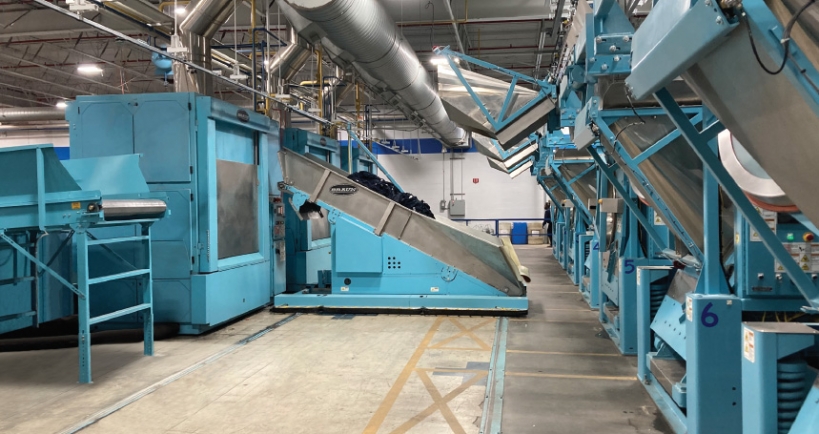
When it came time to upgrade their aging wash alley at the New Bedford, MA facility, Clean Uniforms once again turned to GA Braun—reaffirming a partnership that began nearly 24 years earlier. The original Braun open pocket wash alley, still operating daily with over 30,000 hours on some machines, was a testament to both Braun’s equipment durability and Clean Uniforms’ commitment to preventive maintenance.
The Project: Wash Alley Modernization and Capacity Expansion
Clean Uniforms and More! President Mark Bodzioch, with support from Braun’s Northeast Regional Sales Manager CJ Spencer, selected Braun for the retool and modernization of their wash alley. “While others may offer similar designs, no one matches Braun’s proven track record of safety, efficiency, cost-effectiveness, and equipment longevity,” said Spencer.
Phased Implementation for Zero Downtime
Because Clean Uniforms needed to remain fully operational throughout the upgrade, the retool project was divided into carefully planned phases. Braun worked collaboratively with the Clean Uniforms team over a five-year period to:
- Design the upgraded wash alley and scope of work
- Develop a detailed work breakdown schedule
- Coordinate equipment delivery, rigging, and installation
- Integrate staff training for seamless operational transition
Braun’s integrated project management ensured that all installation phases aligned with Clean Uniforms’ production schedules. The company coordinated equipment rig-out, freight logistics, and closely partnered with third-party MEP contractors for utility installation.
New Equipment Installation: Boosting Safety and Efficiency
In the first phase, Clean Uniforms’ existing Braun dryers were replaced with high-performance Braun 500PT dryers. The second phase focused on washer and shuttle system upgrades, as well as replacing the soiled rail system to further improve efficiency and safety.
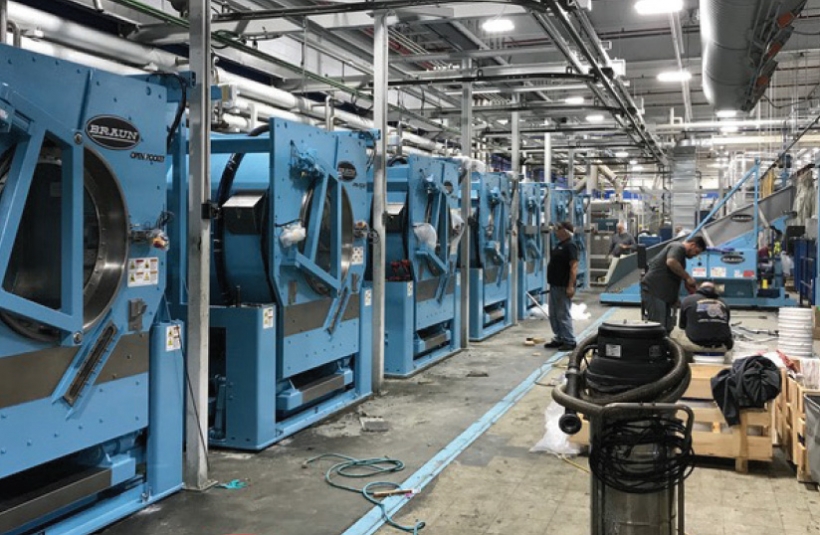
Braun replaced the older 400 series open pocket washers with the space-saving N2 design—allowing the addition of a new washer within the same footprint. The new washers were integrated with a chute-load rail system, eliminating the need for manual loading inside the wash alley. This enhancement drastically improved safety and automation.
Braun’s versatile chute load design worked seamlessly with Clean Uniforms’ preferred rail provider, showcasing Braun’s flexibility and commitment to tailored integration.
Results: Improved Throughput, Safety, and Labor Efficiency
“In several phases, Braun was able to replace the dryers, washers, shuttle, and upgraded discharge conveyors—all while keeping Clean Uniforms and More! running with only minor weekend interruptions,” said President Mark Bodzioch.
Key Outcomes:
- Labor requirements reduced
- Production increased by 3 loads per hour
- Enhanced operator safety with chute load system
“Our goal is always to complete projects safely, on time, and within budget,” added Cliff Quick, Director of Inside Sales and Project Management at GA Braun. “We pride ourselves on executing based on our clients’ goals through detailed consultation, design, and installation.”
Is Your Facility Ready for a Retool?
Whether upgrading aged equipment or preparing for future capacity, Braun delivers high-efficiency laundry solutions customized to your operational needs. Contact us today to learn more about modernizing your laundry facility.
Optimización de procesos para secadores nuevos y existentes
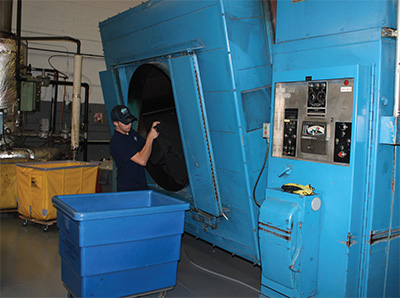 Maximizar el rendimiento y la eficiencia energética de las secadoras es fundamental para las lavanderías industriales. Aunque el sector se ha beneficiado de unos precios de la energía relativamente bajos en los últimos años, la optimización del proceso de secado sigue siendo esencial por tres razones fundamentales:
- Tendencias del mercado: El secado completo de la ropa blanca es cada vez más habitual en los principales segmentos del mercado: sanidad (80%), hostelería (55%) y alimentación y bebidas (40%). Se espera que esta tendencia continúe a medida que ganen popularidad los tejidos sintéticos, que requieren condiciones de secado específicas para mantener su integridad.
- Evolución del tejido: Los sintéticos retienen menos agua tras la extracción, lo que reduce el consumo de energía y los tiempos de secado. Sin embargo, son muy sensibles al calor, y un secado inadecuado puede acortar considerablemente el ciclo de vida de la ropa.
- A prueba de futuro: Incluso con costes energéticos bajos, la optimización de los procesos de secado ayuda a las instalaciones a seguir siendo rentables y a estar mejor preparadas para posibles fluctuaciones del precio de la energía.
Consideraciones mecánicas clave
Para optimizar el rendimiento de los secadores, los operadores deben abordar en primer lugar los factores mecánicos externos, ya sea modernizando los equipos existentes o instalando secadores nuevos.
1. Conductos adecuados para el escape y la admisión
Los conductos mal dimensionados o instalados son una de las principales causas de ineficacia de las secadoras y de un mayor consumo de energía. Un flujo de aire deficiente también puede dañar la ropa blanca y crear condiciones de funcionamiento inseguras. Una simple prueba de manómetro puede evaluar la presión de escape:
- Ideal: 0,5 pulgadas de columna de agua o menos
- Crítico: Más de 1,5 pulgadas (debe detenerse el funcionamiento y corregirse el flujo de aire)
Las entradas de aire fresco también desempeñan un papel fundamental. Las instalaciones que sellan las puertas de los garajes en los meses más fríos pueden notar el cierre automático de las puertas debido a la presión negativa. La introducción de aire exterior puede ayudar a regular la humedad, mejorando la eficacia del secado.
2. Dimensionamiento adecuado del gas
Las secadoras más antiguas pueden funcionar a una presión de gas inferior a la óptima debido a diseños obsoletos, lo que provoca un rendimiento ineficaz. Asegúrese de que las secadoras reciben la presión de gas correcta consultando el manual del propietario o la placa de características del equipo y, a continuación, colabore con los fabricantes y contratistas para confirmar el volumen de gas adecuado.
Factores clave del rendimiento de las secadoras
Más allá de los elementos mecánicos externos, la optimización de un secador existente requiere prestar atención a los componentes internos que afectan directamente a los tiempos de secado y al consumo de energía.
1. Minimizar la infusión de aire ambiente
Las fugas en las juntas de las puertas, las cestas de las secadoras mal diseñadas o las tolerancias de fabricación deficientes permiten la entrada de aire ambiente en la cámara de secado, lo que interrumpe el proceso de secado. Las secadoras modernas cuentan con puertas herméticas y juntas colocadas con precisión para garantizar que el aire pase a través de la cámara de combustión antes de llegar a la ropa blanca.
2. Mejoras en la ingeniería del flujo de aire
Los antiguos diseños de secadores se basaban en estimaciones manuales de ingeniería en lugar de en análisis científicos del flujo de aire. Los secadores actuales utilizan la dinámica de fluidos computacional (CFD) para optimizar el flujo de aire, lo que reduce los tiempos de secado y el consumo de energía.
3. Mantenimiento de sopladores y filtros de combustión
En las secadoras más antiguas (más de 10 años), los filtros obstruidos pueden provocar mezclas de gas-aire deficientes, llamas ineficaces e incluso incendios en la secadora. Muchas secadoras modernas eliminan este filtro, reduciendo las necesidades de mantenimiento.
4. Comprobación y sustitución de juntas
Todas las secadoras utilizan juntas que se desgastan con el tiempo. Los modelos más nuevos incorporan juntas más duraderas y fáciles de sustituir, lo que reduce las fugas de aire y mejora la eficiencia.
5. Mantenga las ruedas del soplador equilibradas y limpias
Las ruedas del soplador facilitan el flujo de aire. Con el tiempo, la pelusa, la suciedad y los pernos sueltos pueden causar desequilibrio, reduciendo la eficiencia y aumentando el desgaste de los componentes. La limpieza periódica y el mantenimiento de las correas evitan la pérdida de rendimiento. Algunos diseños más recientes utilizan ruedas que eliminan la pelusa para reducir la acumulación de residuos.
6. Supervisar la limpieza del cilindro secador
Los revestimientos como el teflón o la cerámica ayudan a mantener limpios los cilindros secadores, pero se desgastan con el tiempo. Evite el calor excesivo o los métodos de limpieza abrasivos para prolongar su vida útil. Los nuevos sistemas de eliminación de partículas en seco proporcionan una limpieza rápida y eficaz de los cilindros sin dañarlos.
7. Mantenimiento de los sistemas de recogida de pelusa
Las secadoras más antiguas utilizaban principalmente la recogida de pelusas para el cumplimiento de la calidad del aire. Hoy en día, los sistemas de pelusa integrados son cruciales para un flujo de aire y un rendimiento adecuados, protegiendo las ruedas del soplador y manteniendo la eficiencia de la secadora.
Optimización del rendimiento y los controles del quemador
Aunque el caudal de aire es un factor dominante, la eficiencia del quemador, los sistemas de control y las prácticas de funcionamiento adecuadas también influyen en el rendimiento del secador.
1. Salud del quemador: Azul es mejor
- Bien: Una llama azul indica una combustión correcta.
- Malo: Una llama amarilla sugiere una pelusa obstruida, una relación combustible-aire incorrecta o la necesidad de ajustar el quemador.
2. Tecnología de control avanzada
Las secadoras modernas ajustan la aplicación de calor en función de los niveles de humedad del lino, minimizando los daños y el encogimiento del tejido. Este control de precisión garantiza que los tejidos reciban la menor cantidad de calor necesaria, lo que mejora su longevidad.
3. Prácticas adecuadas de carga
Cargar una secadora hasta su capacidad declarada afecta significativamente a la eficiencia. Debido a las diferentes densidades del tejido, los operadores deben ajustar con precisión los pesos de carga de las diferentes clasificaciones para maximizar el rendimiento.
Reflexiones finales
La eficiencia del secado es una ciencia que requiere una cuidadosa atención al flujo de aire, el estado mecánico, el rendimiento del quemador y la gestión de la carga. Las lavanderías industriales deben colaborar estrechamente con los fabricantes de equipos para aplicar las mejores prácticas y garantizar la fiabilidad y eficiencia de las secadoras a largo plazo.
¿Necesita asesoramiento experto para optimizar sus secadoras? Póngase en contacto con GA Braun para obtener soluciones a medida que maximicen el rendimiento y reduzcan los costes operativos.
Maximizing production throughput in an industrial laundry operation requires a proactive approach. Too often, operators focus on where a problem manifests rather than identifying upstream inefficiencies that create bottlenecks. Addressing these root causes can significantly enhance productivity, efficiency, and cost savings.
Washroom Challenges and Solutions
1. Soil Sorting and Load Management
The foundation of an efficient washroom begins with proper soil sorting. When materials aren’t staged correctly, it leads to underloaded machines, unpaired batches in tunnel washers, or empty pockets. These inefficiencies reduce capacity and disrupt downstream operations.
Prevention:
- Implement disciplined sorting practices to ensure full and balanced loads.
- Train staff on proper staging techniques to maximize equipment utilization.
2. Formula Management and Cycle Optimization
In conventional washing, modern machines offer significant flexibility to optimize both the wash and extraction processes. However, many operators don’t fully utilize these capabilities. On the tunnel washing side, there’s a common misconception that running shorter cycles (e.g., 90 seconds) increases throughput. In reality, optimal extraction requires sufficient high-pressure time—typically 60–75 seconds—to achieve the best water removal and efficiency.
Prevention:
- Work with OEMs to understand the full potential of your equipment’s extraction settings.
- Adjust cycle times to optimize drying efficiency and reduce conditioning needs.
3. Material Handling Delays
Many facilities struggle to keep up with unloading dryers and conveyors, leading to avoidable slowdowns. Often, this is a matter of operational discipline rather than a lack of capacity.
Prevention:
- Implement clear unloading procedures and accountability measures.
- Regularly evaluate workflow efficiency to identify and address bottlenecks.
Finishing Line Inefficiencies
1. Ironer Line Speeds and Boiler Capacity
Insufficient ironing line capacity can result from inadequate ironer size, insufficient surface contact pressure, or excessive moisture content in bypassed items.
Prevention:
- Ensure your ironers and boilers are adequately sized for your throughput.
- Optimize wash formulas to minimize unnecessary conditioning before ironing.
2. Manual Material Handling Bottlenecks
The finishing end of the process is labor-intensive, and inefficiencies in material handling can create costly slowdowns. Automation can provide substantial benefits but must be integrated thoughtfully to avoid introducing new bottlenecks.
Prevention:
- Evaluate automation options to streamline labor-intensive processes.
- Design automation solutions that align with your facility’s workflow and capacity.
3. Equipment Versatility and Product Mix Alignment
Many plants rely on specialized machines that can only process specific product types. Once those items are finished, the equipment sits idle, creating inefficiencies in labor, energy, and overall capacity.
Prevention:
- Invest in equipment that offers flexibility to handle a variety of product types.
- Continuously reassess your product mix and adjust processing strategies accordingly.
Reflexiones finales
While every laundry operation has its unique challenges, these common problem areas often present the greatest opportunities for improvement. By focusing on upstream efficiencies, proper load management, optimized formulas, and effective material handling, facilities can significantly enhance throughput without unnecessary capital investment.
Taking a strategic approach to these operational areas will not only improve production flow but also reduce costs, save energy, and enhance overall efficiency. Looking for expert guidance? Consult with GA Braun to optimize your industrial laundry operations today.
Whether you’re designing a new laundry facility, renovating an existing plant, expanding operations, or installing new equipment, it’s crucial to approach layout and infrastructure planning strategically. A well-designed plant layout ensures smooth process flow, supports utility efficiency, and prepares your business for future growth.
Why Layout Planning Matters
In an ideal scenario, a new facility would begin as a blank slate. Architects and engineers would collaborate with the laundry operator to design a production environment optimized for current needs and long-term expansion. Unfortunately, most laundry projects fall into the categories of renovation or expansion—making them more complex due to the need to maintain ongoing operations during implementation.
At GA Braun, we understand these challenges and partner with clients to implement efficient, safe, and cost-effective equipment installation strategies. Our team helps design layouts that maintain production continuity while supporting strategic business objectives.
Common Challenges in Existing Facilities
Many healthcare, commercial, and industrial laundry operations function in older buildings with limited space and outdated layouts. Expansion often takes the form of patchwork additions, resulting in inefficient workflows and restricted equipment capacity.
We often find tunnel washers installed in building corners with no room for growth. These “jigsaw puzzle” layouts may solve short-term issues but can hinder long-term success. That’s why our approach emphasizes comprehensive design planning that includes:
- Space allocation for future equipment
- Optimal process flow
- Equipment flexibility
- Minimizing the need for future structural changes
Braun includes placeholders for future machines in layout renderings, helping clients visualize and prepare for scalable growth.
Key Design Considerations
Whether building new or renovating, every layout should support both current and future operations. Key planning elements include:
- Process Flow Optimization: Equipment should be arranged to minimize manual handling and support efficient material movement.
- Ceiling Height & AFF Clearance: Sufficient clearance is essential for monorail systems and overhead equipment.
- Utility Infrastructure: Design must support current equipment needs and future expansion in electrical, water, steam, and gas systems.
- Support Areas: Include dedicated spaces for chemical storage, linen storage, loading docks, office space, maintenance, employee facilities, and parking.
- Truck Access & Logistics: Ensure routes accommodate large transport and delivery vehicles.
Clients often approach us wanting to add equipment to boost production, but equipment alone may not solve underlying workflow issues. That’s why we begin by analyzing material flow, production metrics, and equipment interaction—often unlocking higher throughput without additional equipment.
Automation for Space and Labor Efficiency
Automation is key to improving efficiency and reducing labor costs in today’s competitive market. Braun has partnered with third-party rail providers for decades to implement automated solutions including:
- Monorail systems for tunnel and conventional washers
- Conveyors to reduce cart usage and manual handling
We’ve recently advanced this innovation with our patent-pending chute-loaded tunnel system dryer. This breakthrough allows automatic rail loading directly into the dryer via a static chute, reducing maintenance and mechanical complexity.
Benefits of chute-loaded dryers:
- Increased layout flexibility
- Reduced motion hazards
- Storage queue before dryers to eliminate scheduling delays
- Industry’s first true side-by-side dryer configuration, saving floor space
Strategic Planning and ROI
Successful laundry design is data-driven. Braun uses tracking tools and analytics to deliver turnkey projects that align with production goals and financial targets.
For example, in a recent healthcare laundry redesign, we proposed a strategic facility upgrade that improved production efficiency, reduced labor and utility costs, and modernized equipment. Here’s the return on investment breakdown:
- Estimated Project Cost: $898,032
- Annual Electrical Savings: $21,000
- BTW Maintenance Savings: $65,000
- Dryer Gas Savings: $10,819
- Ironer Gas Savings: $17,646
- Labor Savings: $279,864
- Total Annual Savings: $349,329
- ROI: 2.28 years
These results show how strategic facility planning and process optimization can deliver immediate and long-term value.
Why Partner with GA Braun
Braun has extensive experience in laundry plant renovations, new facility construction, automation integration, and high-efficiency equipment upgrades. Our project managers collaborate with your internal team, architects, contractors, and engineers to deliver scalable, cost-effective solutions—from concept to completion.
Let GA Braun help design your laundry operation for long-term growth, operational efficiency, and maximum ROI.

Metrics are the backbone of efficient industrial laundry operations. Without proper measurement and analysis, businesses struggle to optimize workflows, control costs, and improve overall performance. Yet, many facilities fail to fully leverage the data at their fingertips, missing opportunities to drive efficiency and profitability.
Why Metrics Matter in Industrial Laundry Operations
Observing day-to-day processes provides valuable insight into a facility’s culture, training level, and operational health. While senior managers often track total processed pounds and revenue trends, they may lack visibility into deeper performance metrics that influence efficiency and bottom-line results.
In many cases, commercial goals dominate reward and incentive programs, overshadowing operational efficiency. This imbalance can lead to unsustainable growth, operational inefficiencies, and declining profitability due to poor resource management.
Key Metrics for Measuring Laundry Efficiency
Successful industrial laundries track performance using industry-specific metrics such as:
- Therms per Hundredweight – Measures energy efficiency in heating water and drying linens.
- Pounds per Operator Hour (PPOH) – Assesses labor productivity in processing volume.
- Gallons per Pound – Evaluates water consumption per unit of laundry.
These metrics provide critical insight into operational effectiveness, helping managers identify areas for improvement, justify investments, and drive performance.
Implementing a Data-Driven Approach
1. Conduct an Operational Assessment
Step back from daily operations and observe processes. Identify bottlenecks, inefficiencies, and areas lacking performance measurement.
2. Define Key Performance Metrics
Establish clear, measurable KPIs for each stage of the laundry process. Ensure all departments align with company-wide efficiency goals.
3. Utilize Real-Time Data for Decision-Making
Empower employees with access to real-time performance metrics. When frontline staff understand their impact on key measures, they can make informed decisions to improve workflow.
4. Align Incentives with Performance Goals
Tie incentives to both commercial and operational objectives. A balanced reward system encourages a culture of efficiency and accountability.
5. Foster Cross-Departmental Collaboration
Use a business process model—such as a circular workflow visualization—to illustrate how all departments contribute to overall success. This approach prevents siloed priorities and encourages teamwork.
The Path to Sustainable Efficiency
Metrics are essential for continuous improvement in industrial laundry operations. Companies that embrace data-driven decision-making gain a competitive edge by reducing waste, increasing productivity, and ensuring long-term profitability.
Want to maximize efficiency in your laundry facility? Contact GA Braun for expert guidance on implementing effective performance metrics.
Effective inventory management is critical to the success of any business, especially in industrial laundry operations. Poor inventory practices can lead to unnecessary costs, inefficiencies, and operational bottlenecks. Mastering inventory is no easy task, but neglecting it can drain cash flow, disrupt workflows, and negatively impact service levels.
The True Cost of Poor Inventory Management
In an optimized business, inventory turnover aligns with industry supply and demand cycles, and cycle counts yield high accuracy. However, when inventory is mismanaged, the following problems arise:
- Excess Inventory Costs: Companies over-purchase in reaction to shortages, leading to bloated stock levels.
- Operational Chaos: Instead of focusing on strategic improvements, employees scramble to manage daily crises.
- Customer Service Issues: Inventory inaccuracies can delay shipments, leading to dissatisfied clients and strained relationships.
- Increased Labor and Equipment Costs: Shortages create inefficiencies that drive up labor, utility, and maintenance expenses.
Key Strategies for Effective Inventory Management
1. Define and Organize SKUs Each SKU should have a clear identity, defined supply chain, designated storage location, and consistent specifications.
2. Understand Demand and Lead Times Track the consumption rates of each SKU and the time required for restocking to avoid unnecessary shortages or overstocking.
3. Implement Automated Tracking and Reconciliation Use inventory management software to monitor stock levels in real time. Regular cycle counts and reconciliation prevent surprises and maintain accuracy.
4. Set Minimum Stock Levels Base minimum stocking quantities on consumption patterns and operational requirements to ensure a stable supply without excessive overstocking.
5. Leverage Supply Chains for Consumables Work closely with suppliers to manage consumable inventories effectively, considering lead times to prevent disruptions.
6. Align Processing with Inventory Needs Avoid inefficiencies by ensuring that production runs are optimized for batch processing, reducing the need for frequent low-volume runs that create operational delays.
7. Simplify Your Inventory Structure Eliminate unnecessary custom SKUs that add complexity and inefficiency. Balance high-volume processing with niche products strategically.
8. Manage Financial Risk of Slow-Moving Inventory Establish a reconciliation process to prevent obsolete stock from becoming a financial burden. Identify and act on slow-moving inventory before it becomes a loss.
Managing Inventory Beyond Your Facility
For laundries handling customer-owned goods, inventory management extends beyond the four walls of their facility. Tracking shipments, returns, and losses in real-time ensures that customers are billed accurately. Clear communication and data exchange with clients prevent disputes and protect your bottom line.
Reflexiones finales
Inventory management is not just about keeping track of stock—it directly impacts operational efficiency, cost control, and customer satisfaction. By implementing these best practices, industrial laundries and OEMs can transform inventory challenges into opportunities for growth and profitability.
Looking to optimize your inventory strategy? Connect with GA Braun for expert guidance and solutions tailored to your business.